Product / Relay

Delegate Real Work.Keep Human Control.

Relay gives operators a self-hosted, model-agnostic control plane to dispatch tasks, review outcomes, approve risky actions, and keep work grounded in project context.

Operator Desk

A governed operator desk instead of tool sprawl

Relay reduces context switching and decision overhead by unifying planning, approvals, and execution in one control surface.

Self-hostedModel-agnosticHuman-in-the-loopProject-scopedOperator-first

Best fit for: Founder-operators, ops leads, and SMB teams running 1-3 practical agents.

Not ideal for: Teams looking for fully autonomous, unattended execution with no approval layer.

Built for governed execution, not demo automation.

Before Relay

  • Execution is split across tabs, terminals, and disconnected tools
  • Folder and project context drifts between tasks
  • Risky actions happen without clear approval boundaries
  • Operators lose visibility into what changed and why

With Relay

  • One desk for dispatch, review, and oversight
  • Project-bound execution reduces context mistakes
  • Safety scopes and approvals gate sensitive actions
  • Activity and artifacts remain traceable by default

Relay Operator Loop

From Intent to Governed Execution

Scroll through the operator flow. The live panel on the right stays fixed and updates for each step.

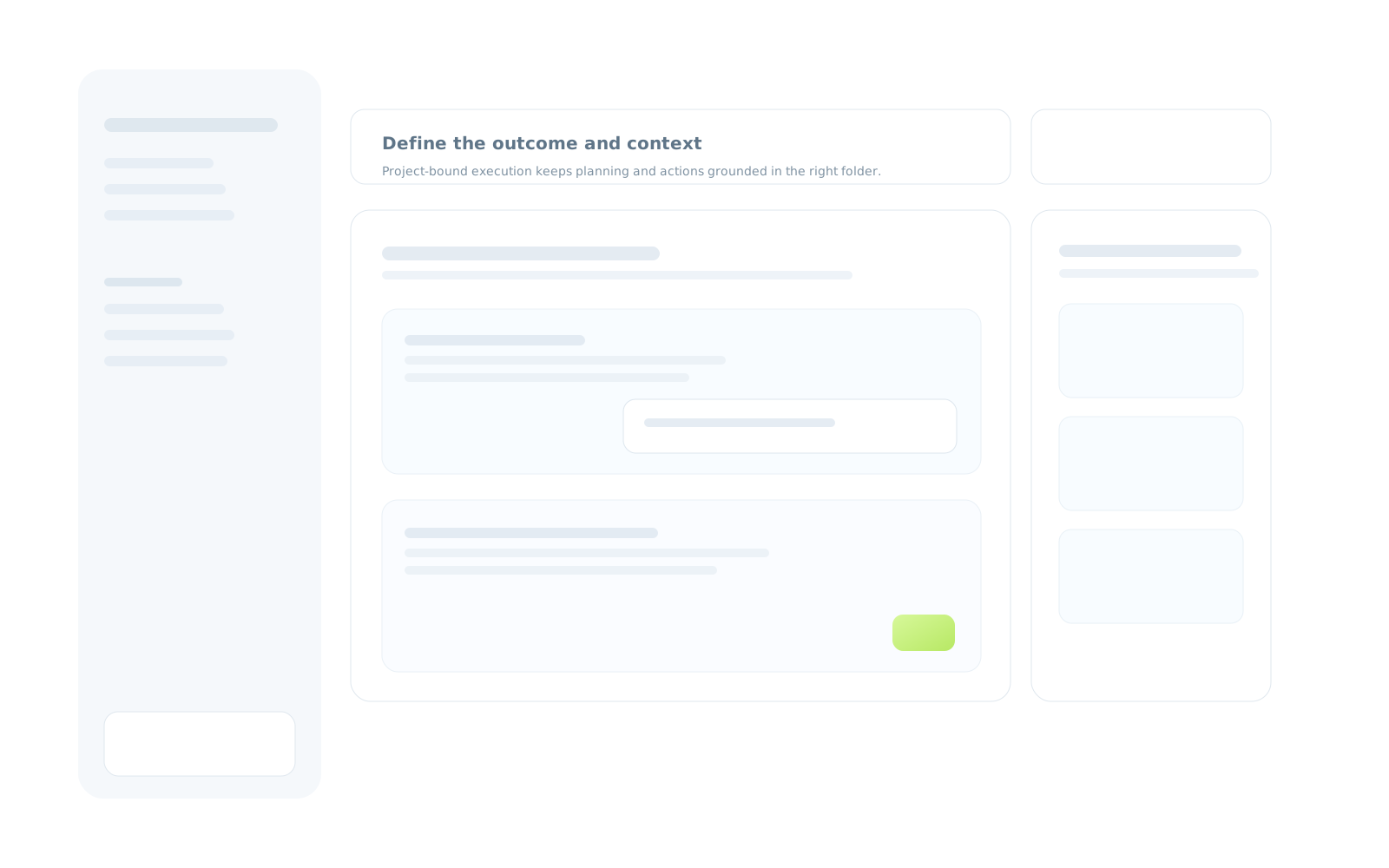
Define the outcome and context

Start from a project with a clear folder boundary, objective, and connector access so execution stays grounded.
Relay intake view
  • Is Relay the AI model? No. Relay is the operator interface and control plane.
  • Can Relay run self-hosted? Yes. Relay is designed for local-first and self-hosted operation models.
Project-bound execution

Every run stays tied to a project and folder boundary so context remains stable across planning and execution.

Relay planning view
  • Use confidently: desktop operator desk for AI work
  • Use confidently: self-hosted, local-first friendly, model-agnostic through OpenClaw

Relay plans and prepares execution

Relay builds a step-by-step plan, maps actions to risk scopes, and prepares the run with full visibility.

Relay execution view
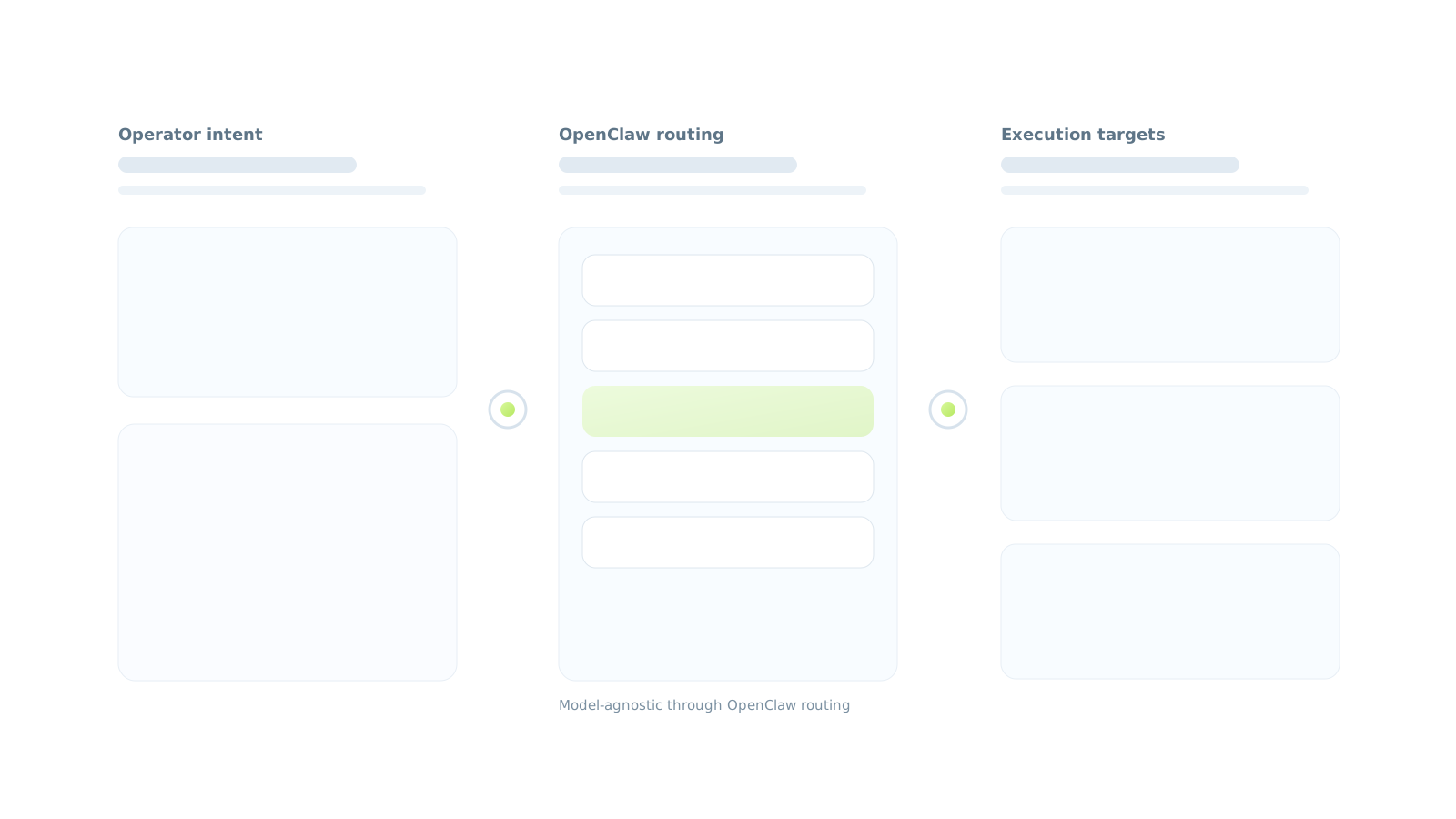
  • Is Relay tied to one provider? No. Relay is model-agnostic through OpenClaw routing.
  • How are risky actions handled? Safety scopes and approval requirements gate sensitive actions.

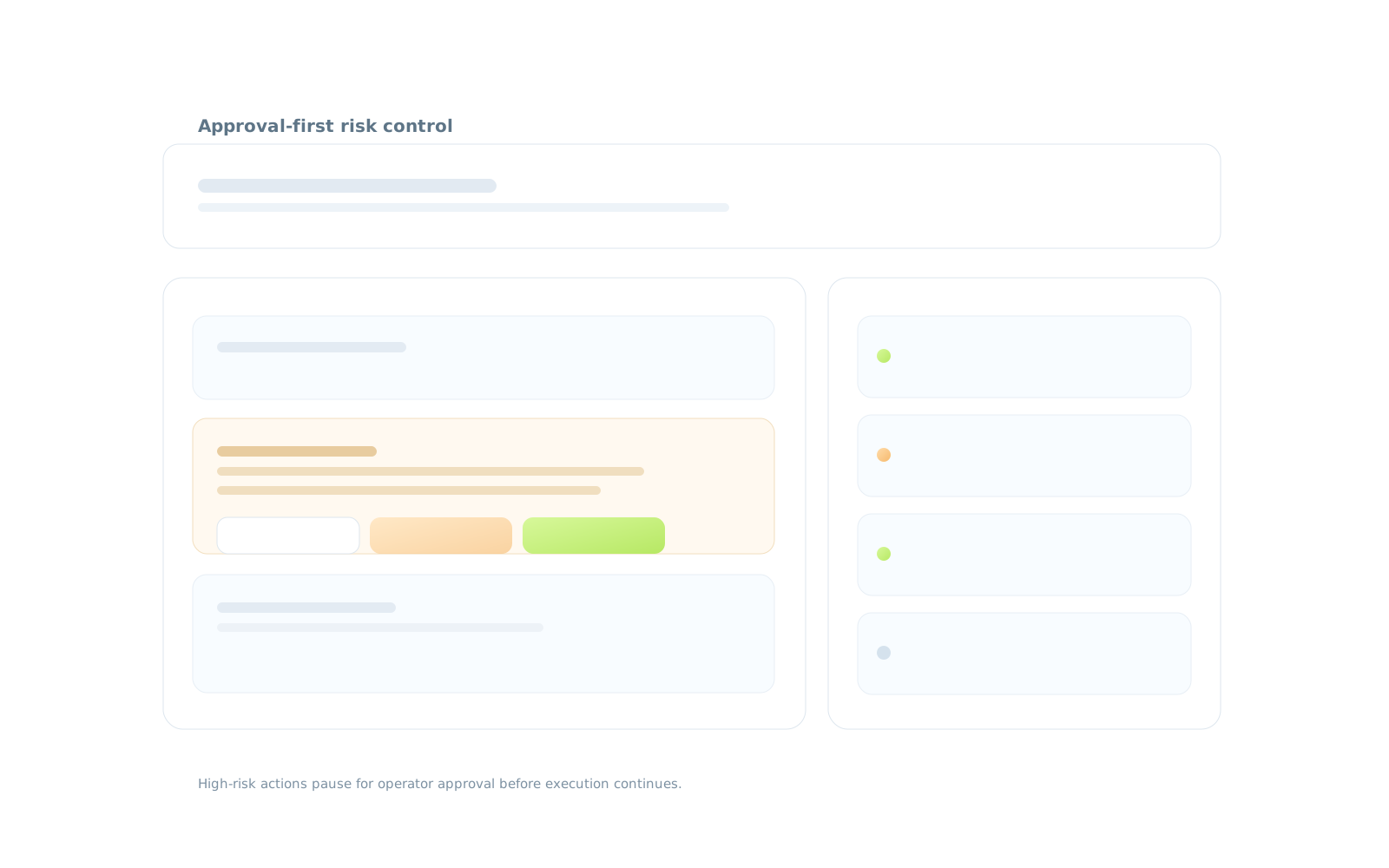
Approval-first risk control

High-risk scopes require operator approval before sensitive actions proceed, preserving speed without losing oversight.

Relay approval view
  • We already use chat tools -> Relay governs execution, not just prompting
  • We need strict approvals -> Relay supports scope-based approval controls

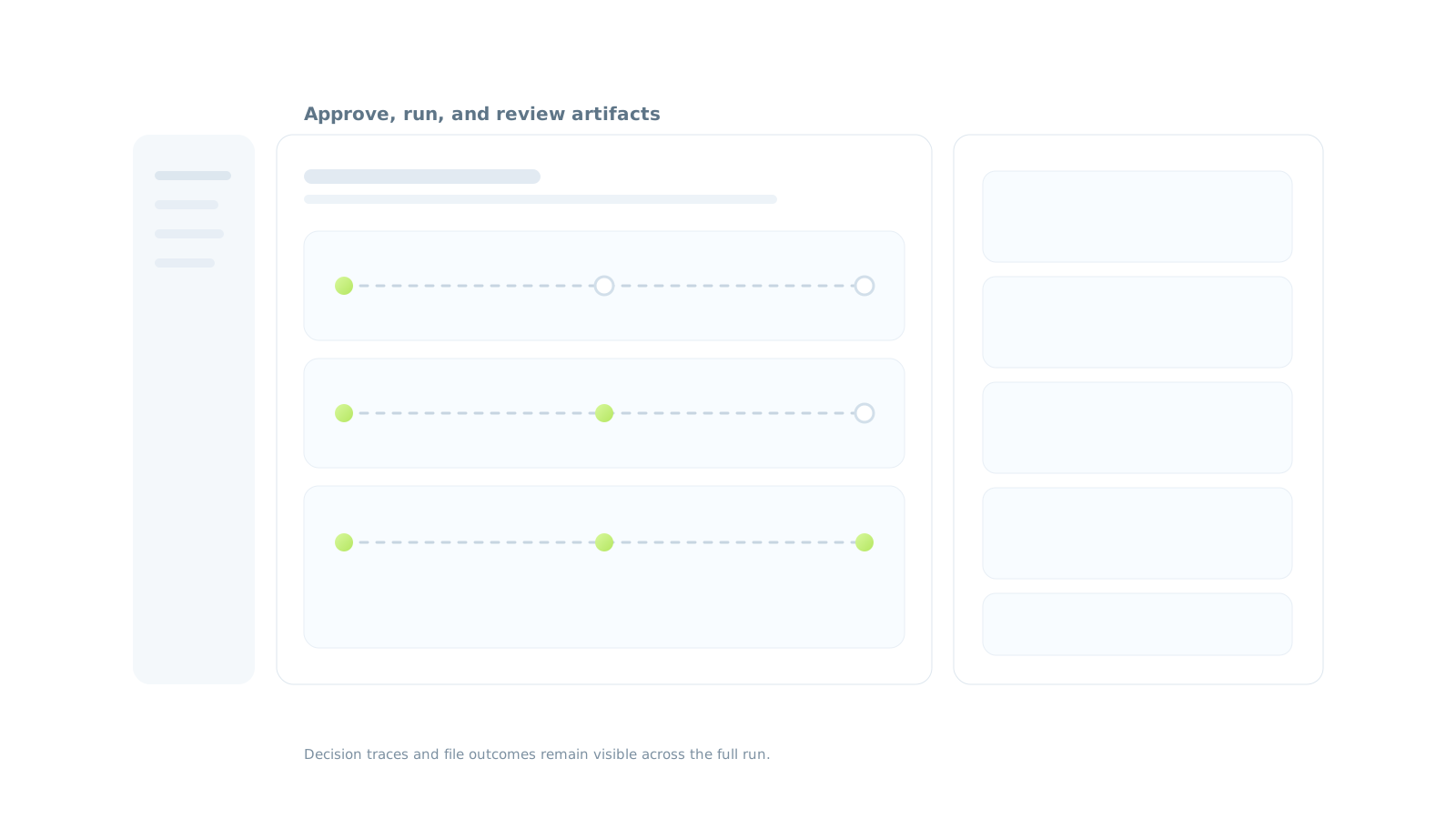
Approve, run, and review artifacts

High-risk actions wait for approval, then Relay executes and records outcomes, file changes, and decision traces.

Relay governance view
  • We need strict approvals -> Relay supports scope-based approval controls
  • We cannot lock into one model vendor -> Relay is model-agnostic via OpenClaw

Local-first file operations

Inspect, create, and update artifacts where work happens so outputs stay visible and reviewable.

Relay delivery view
  • Avoid unqualified claims: fully autonomous unattended operations
  • Avoid unqualified claims: complete compliance certification out of the box

Shipping now

Core Relay capabilities available today for governed operator workflows.

Desktop operator interface

One desktop surface for Cowork, Files, Activity, Memory, Schedule, Safety, and Settings.

See workflow

Chat and cowork task execution

Move from conversation to execution with task states, run feedback, and recents in one loop.

Explore loop

Project-based context

Bind each cowork run to a named project and root folder to reduce context drift and file mistakes.

View project model

File operations and browsing

Review project files and local files with preview, metadata, and direct file actions from the same desk.

Inspect workspace

Safety policy and approvals

Use low, medium, high, and critical scopes with per-scope approval requirements for risky actions.

Review controls

Connector foundation

Run policy-aware actions through connectors with File System active and Shell/Web Fetch available.

See connectors

Schedule and memory visibility

Track scheduled jobs and reusable memory context so operators reduce repeated prompting.

See roadmap

Endpoint routing

Connect Relay to local, VPS, or custom OpenClaw endpoints without changing operator workflow.

Star on GitHub

In build and near-term roadmap

These items are in active development and should be positioned as coming next, not as current core claims.

Dispatch mode and background queue

Persisted result delivery for background task runs so operators can delegate and return with full context.

Server-side persistent threads

A stronger shared source of truth for session continuity and long-running operational workflows.

Expanded connector ecosystem

Slack, GitHub, Notion, Drive, and Calendar connectors to extend execution while preserving policy controls.

Deeper governance and audit

Richer audit tooling and stronger schedule authoring flows for teams with stricter operating requirements.

Claim guardrails for product copy

  • Use confidently: desktop operator desk for AI work
  • Use confidently: self-hosted, local-first friendly, model-agnostic through OpenClaw
  • Avoid unqualified claims: fully autonomous unattended operations
  • Avoid unqualified claims: complete compliance certification out of the box

FAQ

  • Is Relay the AI model? No. Relay is the operator interface and control plane.
  • Can Relay run self-hosted? Yes. Relay is designed for local-first and self-hosted operation models.
  • Is Relay tied to one provider? No. Relay is model-agnostic through OpenClaw routing.
  • How are risky actions handled? Safety scopes and approval requirements gate sensitive actions.

Why teams switch to Relay

Relay is built for teams that need execution governance, data control, and model flexibility without giving up operator velocity.

  • We already use chat tools -> Relay governs execution, not just prompting
  • We need strict approvals -> Relay supports scope-based approval controls
  • We cannot lock into one model vendor -> Relay is model-agnostic via OpenClaw

Run your first governed task

Start local-first with Relay, connect your endpoint, and execute AI work with approval controls from day one.